Showing posts with label Carnegie Award. Show all posts

The Enid Blyton of Murder! Tanya Landman at the Abingdon Joint Author Event

Tanya Landman started off receiving some fantastic career's advice at her school - nurturing, inspirational - which can be summed up as 'if you don't know what you want to do in life, you're doomed!". Luckily for her - and us - she wasn't too freaked out by this mentoring-from-hell experience, and after working in a bookshop, Arts Centre, Bristol Zoo and travelling performer - she became an author.

Her breakthrough book was 'Apache' - shortlisted for the 2008 Carnegie Medal - and the seed of an idea from that book grew, several years later, into 'Buffalo Soldier' which won last year's Carnegie Medal and, quite rightly, elevated Tanya to the Pantheon of contemporary children's authors. It was a huge coup to get her to come to Abingdon, and groups from eight schools in Abingdon came to visit over three sessions.

Tanya is funny, wise and inspirational - and (with the help of a large globe) gave the children a crash course in geo-politics and the history of colonialism in North American. She shared her own journey of understanding of American history, from facts gleaned from the pages of 'Gone with the Wind' and watching Westerns, to the stories of remarkable native americans - and the freed slaves who fought against these brave warriors in the aftermath of the American Civil War.

In her own words she felt that these hidden stories of the American Deep South were "a piece of the jigsaw dropped down the back of the sofa of history" and felt compelled to tell that story.

Along the way, we discovered the real reason Tanya started writing murder mysteries for kids (no spoilers here, but we will say that this story is worth asking Tanya to come to your school all on its own), the inspiration behind the children - and dog - in her Sam Swann books, and why you wouldn't want to be up against her at an award's ceremony...

Tanya enjoys writing about murder (possibly a little too much, according to her publisher). In ‘Mondays are Murder’, her child sleuth Poppy Fields goes on an activity holiday to a remote Scottish island. She is looking forward to a week of climbing, hill-walking and horse riding. But things take a bad turn when their instructor has what appears to be a fatal abseiling accident. When Poppy discovers that his rope was cut, and more of the instructors start to have "accidents", she and best friend Graham suspect foul play and decide to investigate...
Tanya's crash-course in colonialism and
'places not to go if you are
a sailor in the 15th century'...

There are now ten books in the series, so the description of her as the 'Enid Blyton of Murder' may not be too far-fetched...

Tanya also talked about her latest book ‘Hell and High Water’. This is a fantastic book for teens, a thrilling adventure story set against the backdrop of smuggling and conspiracy, and based on research Landman did around the notorious villain Thomas Benson, owner of Lundy Island, corrupt merchant and MP for Barnstaple in the 18th century.

When a body washes up on a beach, Caleb Chappell finds himself involved in a dastardly plot: a plot that places him and his family in mortal danger. With his father falsely accused, it is up to Caleb to save him.

Drawing parallels with modern political corruption, this tells a gripping tale with plot twists galore and strong, believable characters that stay in the memory.

In between sessions, we asked Tanya to tell us a little bit about her writing life...

Five Questions with...Tanya Landman's Writing Life

1.    What are you working on at the moment?
Not telling you!

2.    What is the best writing tip you’ve ever been given?
Daydream! Get it all started in your head first, before putting pen to paper. Writing it out is just technique, but you need to get the idea ready in your head. It needs to get you excited – it’s why I didn’t want to tell you about what I’m working on at the moment actually, because I feel if you talk about it too soon when it’s still in your head, you ‘deflate the cake’!

3.    What’s the best thing and the worst thing about being a children’s writer?
Getting out to schools, book events, or the Carnegie Shadowing. It’s incredible how much energy and enthusiasm you encounter. The worst thing? Every author has days when, what you are writing, isn’t just the worst thing you’ve ever written, but the worst rubbish any author has ever written, ever. You have to write through it of course – but those days are really tough.

4.    Do you have a writer’s survival kit, eg a place, thing, or snack essential before you can start work?
Cup of tea!

5.    What was your biggest breakthrough?
With Apache, it was really the moment when an idea was triggered in my head, and my fingers started twitching, and I had an image in my head. This had never really happened before, and was very different to things I had written before.


The Abingdon Joint Author Event has seen some fantastic authors over the years - Caroline LawrenceAlan GibbonsJulia Golding and Marcus Sedgwick - and yesterday's event with Tanya was a splendid addition to this tradition.

As always there is an incredible amount of hard work behind the scenes from the Abingdon school librarians and teachers who accompanied children to and from the event - we honoured to be asked to get involved. We know just how much time, effort and planning goes in to taking children off timetable - but hopefully listening to an inspiring, award-winning author is worth all the effort!

Thanks also to the awesome help from Jo and Sally, and finally, thanks to Tanya for being such an amazingly inspiring speaker, writer (and incidentally passing the Mostly Books "authors-you'd-most-want-to-go-down-the-pub-with' test!)

To discover more about Tanya, come into Mostly Books to discover what she has written - or visit her website to learn more about her writing.

IBW2015: the slingshot effect, or how to get to Pluto using only books

This post is a biggie. It will take us deep into the world of books and independent bookshops. It will also take us to the very edge of the solar system.

Hold on to your hats...

The last few weeks have been *busy* for us - the end of June means the end of term, and that means prizes and school gifts, the start of lots of visitors visiting the beautiful town of Abingdon (from all over the world) and the Summer reading season. And nice weather just means there are more folks out on the street...

In recent years this heady mix has also included Independent Bookshop Week, a chance to celebrate the passion, expertise, quirkiness and general wonderfulness that is the world of independent bookshops.

In recent years we have taken advantage of the tremendous support of publishers and authors to put on events and set up promotions. This year has been no different.

Bookshops have a love/hate relationship with events. Good events are some of the best experiences we have, and create real magic in the shop and around the community. But the sheer range of events that we put on - bookgroups, children's activities, author readings, signings, not to mention all the online activities - mean that it's tricky to get the balance right. Too few of the right events and customers won't come. Worse, if you do too many, you risk collapsing with exhaustion, or just distracting yourself from the basics - being a great bookshop.


Given our enthusiasm for all things space at the moment we are going to share with you what we did during IBW2015, and share with you our theory of bookshop events. It's called 'the slingshot effect' and it has everything to do with a journey that reaches its climax next Tuesday, as a small, fragile satellite bristling with technology whizzes past the dwarf planet Pluto.

We want you to think of that satellite as an independent bookshop. The story of how it got there remarkable, and stories are what we are all about...


First up for us was the annual Carnegie Shadowing event at Abingdon's Guildhall. Six secondary schools, over 100 pupils, get together, are mixed up into different groups, and spend a day preparing and then 'pitching' short performances about each of the shortlisted books. We're extremely proud to be one of the sponsors of the event - and we also sit on the panel of judges, reviewing and awarding prizes to the best reviews.


The amount of energy generated - and the sheer enthusiasm about reading and reviewing often challenging new books - is infectious and hugely enjoyable. As in previous years, some of the shortlisted titles generated a lot of controversy. But, as in previous year, the children involved proved themselves resilient, open-minded and mature in the way they considered the books.

As one young reviewer said of 'Buffalo Soldier', the eventual winner, "It captures your heart in a stunning way by really highlighting the travesty of war. It lingers on how you can't wash away blood, no matter how hard you scrub".


A big annual event with a halo of good stuff surrounding it. This event is a bit like Saturn.

Then Independent Bookshop Week began in earnest. We had shop visits by school groups from three separate schools. We were able to talk to them and get them excited about books - as in previous years, some of the children had never visited a bookshop before. Even our customers got involved at one point, becoming ad hoc reviewers amongst the bubble of enthusiasm and new titles from newly-discovered authors.

Chaotic. Intense. The readers of the future. And given that at least one of our year 10s chose 'The Martian' - Mars seems very appropriate.


On the Thursday evening everyone was utterly charmed by Laura Barnett, author of one of the hottest debuts of the year 'The Versions of Us'. 

On a sultry Summer's evening in a packed courtyard garden, Laura described her writing journey and the themes of her book - which takes three characters on their own journey through three different versions of their lives.


We love doing events with authors at the very start of the literary journey, and Laura is destined to go far. An evening star, with exquisite and beautiful prose, we have to compare her and the event to Venus!

We had plenty of other things going on during IBW2015 - storytimes, promotions - and of course plenty of new titles to recommend to those people coming in to show support.

But on the final Saturday we had a very special event indeed to coincide with the meeting of our YA bookgroup. We had invited Sally Nicholls along to talk to the group - the challenged and delighted of writing for children, and her own journey as a writer - and we were utterly thrilled to learn that Sally's book 'An Island of Our Own' had won the IBW2015 Children's Book Award.


So we were proud to present Sally with her award, welcome some important visitors to the shop, and listen to her talk to the group in the blistering sun of the courtyard garden.

In terms of the temperature, and excitement, this was hot. Sally's fleetness of foot, and her delivery of some very good news means we have to choose Mercury.

(There was also an abortive attempt to appear on BBC Radio Oxford during the week - mission scrubbed due to traffic - 'space is hard' as they say...)

We told you to think about that tiny satellite. In order to get 'New Horizons' out to Pluto quickly, it had to be looped around at least five of the other planets, exactly as if you were using a slingshot and a tiny pebble.

We believe the 'slingshot' approach to independent bookselling is a great one for scheduling events. Some events are big, some are small, all change your trajectory and endeavour to propel you faster towards your distant goal.

And what is that goal? An excited community. A widening readership. Serendipity and discoverability. And the continued existence of a diverse bookselling world.

In short - the very best of what independent bookshops can be.

As you may know, Mostly Books is about to embark on a slightly new direction and the next stage of its journey. To everyone who supported - and continues to support - us, and all the other wonderful independent bookshops out there, thank you!

Abduction, Abuse, Brutality, Hope: The Abingdon Carnegie Forum 2014

Of the four words in the title, can you spot the odd one out?


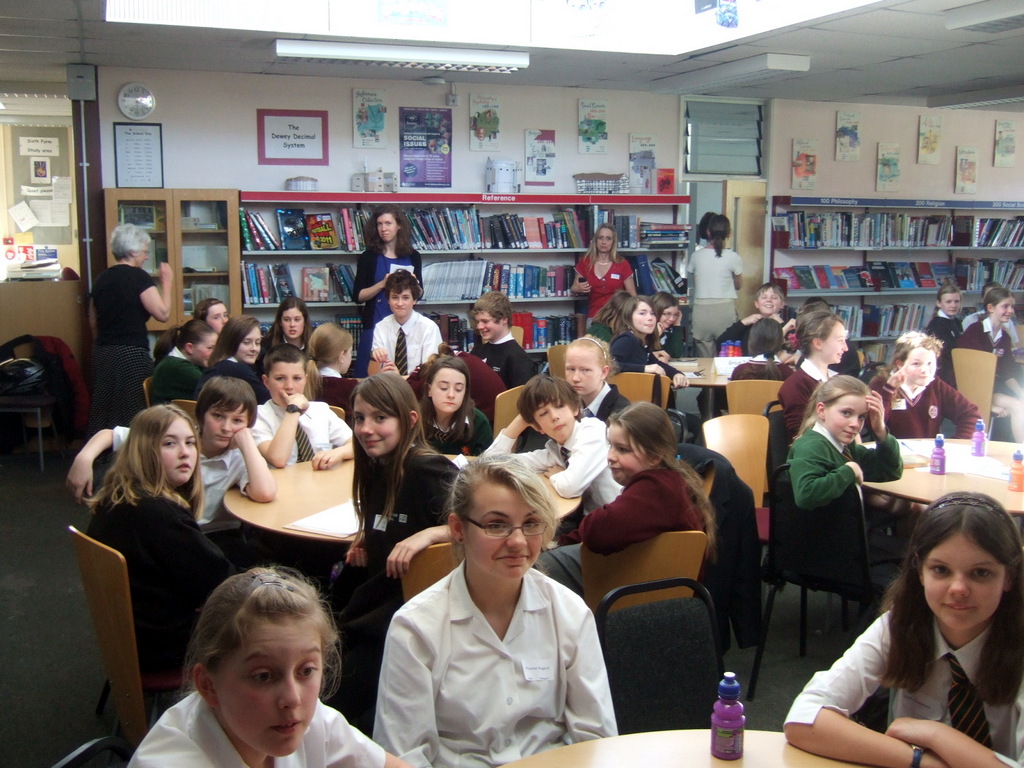
The annual Abingdon Carnegie Forum is one of the highlights of our year - something we have been involved in for six years now, ever since our first forum back in 2008. The forum sees Carnegie Shadowing Groups from six school in Abingdon come together, with a day of workshops and frenetic activity to celebrate the culmination of this year's Carnegie award. As well as a vote amongst students as to their favourite book, schools are mixed up into different groups, and they are given one of the shortlisted titles for which they have to put on a 4-minute performance in front of all the other students.

Terrifying huh?

The aim is to 'pitch' the book to the audience, using the performance to convince us all that their book deserves to win. It works brilliantly, even though for some of the students they are having to pitch a book that they may not have necessarily liked.

This year had a very different feel to it for several reasons. Firstly, I was chair of judges this year for the first time, which meant I had to concentrate extra hard to make sure I didn't screw up in announcing the winners at the end of the day (I have 'previous' in this area).

Whilst I missed the opportunity to take a Jim-Al-Khalili-style audience selfie, I did perhaps the next best thing...

Secondly, this is the first forum I have been involved in where the winner was known before the actual event. The Abingdon forum is notorious for never voting for the winner, so would this be different this year?

Finally, it cannot have escaped anyone's notice that the shortlist this year has been, well, a tad controversial. Four of the books deal with abduction and abuse in some form and certainly in the shop, we have had more conversations with (and concerned emails from) parents this year concerned about the content of the books that children involved in the Shadowing were being asked to read.

Stand out titles in this regard were the brutal and bleak 'The Bunker Diary' by Kevin Brooks (abduction, torture, murder), 'Blood Family' by Anne Fine (alcoholism and drug-abuse), 'All The Truth That's In Me' by Julie Berry (abduction, mutilation) and 'The Child's Elephant' (elephant poaching, child conscripts).

A jolly old roster of themes to get stuck into. And it was notable - and we judges made the point in our summing up - that several children had had difficulty sticking with the books. Phrases like 'it will shock and disturb you no end' (All The Truth That's In Me), 'his mother, beaten and crazy' (Blood Family) and 'pointless and crushing' (Bunker Diary) were accompanied by a general sense of unease and a surprising amount of guidance in terms of how old readers should be to deal with the violence.

(For an excellent collection of reviews on each of the shortlisted titles, head on over to Space on the Bookshelf, which has been reviewing each title and the competition in genera, for the last few weeks)

And yet, and yet...

"I think [it is] is a gripping, skilfully written novel. I felt that every word that had been printed was true and spoken directly to me, as if there was no book, just Eddie and the other characters standing in front of me talking" (Blood Family)

"...an amazing, well-written, unforgettable story that kept me reading almost non-stop from three o'clock in the afternoon until I finished at one o'clock in the morning" (Bunker Diary)

"This book proves the true significance of friendship" (The Child's Elephant)

The 'Rooftoppers' group and
infamous 'Chelsea Buns'!
Talking to some of the children, may had mixed emotions about books that hadn't exactly 'enjoyed' but felt were 'amazing'. In that regard, some of these young readers had had wonderful literary experiences, which many adult readers may never have had.

Many of the reviews described reading late into the night to finish what were gripping books.

The unprecedented outpouring of hand-wringing and condemnation of The Bunker Diary in particular (notably being described as 'vile and dangerous' by Lorna Bradbury in The Telegraph) has been met by a robust defence by the CILIP judges and from his publisher Puffin. Children's book critic Amanda Craig, hugely respected throughout the publishing world, has tried to provide some context by looking at the history of the Carnegie in this article in The Independent. However, she refused to review The Bunker Diary on publication because it was so bleak.

This definitely feels like battle lines being drawn up - and booksellers are increasingly finding themselves on the front line of this battle, having to listen to the concerns and alarm of parents, and - increasingly- school librarians (under pressure IMHO to take the side of CILIP and defend books they feel uneasy about).


The reality is that many of the children actually doing the Shadowing tend to be 11-13, because the older children get, the less time they have to read generally, and the more focused they tend to be on studying for exams (we know this anecdotally from the shop: nothing kills reading for pleasure more effectively than exam pressure). Several of these books are for teens - indeed Kevin Brooks' own defence is that he's written for teens, and 'they can handle it'. But a significant number of the readers aren't teens. And even when age guidance is given by school librarian, those confident bright readers who are up for a challenge don't want to be left out. Remember peer pressure at school? Difficult to resist.

CILIP can't pretend that this isn't an issue, and they have a responsibility not to put children, parents and librarians in positions where children are under pressure to read what they can't handle.

Recreating a scene outdoors
ahead of the performance
But there is also the commercial pressure from publishers to 'up the ante' in terms of content to tap into the current sweet spot of publishing ('Young Adult'). We recently had a big argument with one of our reps, who age-guided a particular book as 12+, and then (sotto voce) hinted that it was really 'at the upper end' of that age range [sic]. Given the brutal content of the book, we decided to formally complain about the age guidance to the publisher (who, to be fair to them, responded sympathetically and are looking into changing this).

Right, time to dismantle the soapbox. I think the most considered and sensible comment on this comes from the extremely wise and sensible Frank Cottrell-Boyce who has said "The Carnegie was instituted as a prize for children's fiction. Brooks is a YA writer. YA fiction is extremely lucrative for publishers...Could not some of the publishers who have done so well out of the category stump up for a YA prize instead of predating on one of the few places where children's books aimed at children can still get some attention?"

(Well said. And splitting the prize would neatly address the 'young shadowers' issue. Will be interesting to see how CILIP respond)

An Abingdon Carnegie Forum tradition - cake!
The vote was taken at the end, and - perhaps unsurprisingly - for the first time, the popular vote matched the actual vote, with The Bunker Diary being the winner. Kevin Brooks deserves a lot of credit for writing such a superb book with great skill - it has had a great, and mostly positive, impact on many of the children who read it.

As always, thanks to the tireless efforts of the Abingdon Schools - particularly the librarians - for creating such a fantastic day, The judges read through an extremely high-quality shortlist of book reviews. What is always impressive is the quality of the reviews, across all the schools, and the language, passion and flair of what is a skill in its own right.

And that odd word out? Hope. Left at the bottom of Pandora's Box, and something we feel all children's books, no matter how dark, should have a little of...

(Update 4/7/14 - the splendid Gerald Dickens, great-great-grandson of Charles Dickens - was the guest of honour, and you can read his blog of the day here. And Griselda Heppel, author of Ante's Inferno, has written a rather excellent, succinct piece on YA fiction, the Carnegie Medal, and how we got here, on her blog).

Tear-stained pages and some good deaths! The Abingdon Carnegie Forum 2013

Today we were involved in one of the most enjoyable events of the year - the annual Abingdon joint-schools Carnegie Shadowing event. This year groups of children from six Abingdon schools took over the Guildhall to discuss, debate, argue, cajole, perform and vote for the eight books on the shortlist ahead of the public announcement tomorrow. 


As has become customary, there were special cakes baked in honour of the occasion. This year all the schools involved were represented on the cake:

The judges had the enjoyable - if intense - task of reading through scores of reviews from the different shadowing groups, picking winners and highly commended entries - and marvelling at the range of responses caused by each of the books. The reviews ranged from the funny and lighthearted, to more passionate and serious responses in which young reviewers pleaded with the reader to 'go read this book' sometimes with 'tear-stained pages' and 'crushingly heart-breaking' storylines.

Here are the judges hard at work in surroundings that had suitable gravitas : 
Children from the six schools were mixed up into different groups and given a book to 'champion' culminating in a three-minute performance in front of everyone to convince them that they should read the book:
Student facilitators from the Oxford Brookes PGCE course were on hand to guide the students and give advice...
 ...and the judges circulated to listen in on the sometimes intense and heartfelt discussions about the type of book it was, and how best to perform it on stage...
 Two groups stages an initial debate to discuss the pros and cons of the book. There were hugely imaginative approaches and it was a privilege to be involved.


Finally, ten groups staged 3-minute performances. They took the form of debates, 'reduced' plays of the books, philosophical skits and 'teasings out' of key elements of the books. Given that this year's books feature quite a bit of characters dying, there were some good stage 'deaths' during the afternoon (and at least one school uniform which got trashed by the looks of things).

The winners - "The Haitians" - staged an imaginative and highly effective 'book event' in which author Nick Lake defended his use of often violent subject matter in 'In Darkness' before Haitian gangsters stormed the stage to explain their position. Totally brilliant and worthy winners: 
Back at the Carnegie Tea earlier this year, the children voted on the book they expected to win before reading commenced. 'In Darkness' was the clear winner then. However, at the end of the event today, all the children voted on the book they would most like to win.

'Wonder' by R.J.Palacio was the clear winner. The reviews from the children for this book had hinted at this. We in the bookshop tend to agree, despite some exceptionally fine books on the Carnegie list this year. 

Whoever wins tomorrow, we all think it's been a golden year for this most august of children's awards - and if you want to learn more about the individual books (and read a plea from Nicki about who should win) go and check out the 'space on the bookshelf' blog here...

Thanks as ever to the incredible hard work and skills of the Abingdon schools librarians, teachers and assistants for making the day so successful. And good luck to all the authors for tomorrow...

Read this book! Carnegie Tea 2012

Shadowing the Carnegie shortlist is a big deal amongst the schools of Abingdon, and this year is no exception. Traditionally, it all kicks of with the Carnegie 'tea', with shadowing groups from lots of different schools learning a little about the shortlisted books, and generally preparing for the reading fest ahead (doughnuts are involved as well).
For the last couple of years, I've given a little talk about 'how to do a book review'. Delivered in my usual, understated way (i.e. excitedly over-caffeinated and with arms flailing) I basically talk about how we do the book reviews you see at the shop and on the blog, oh - and on Twitter, Facebook, Pinterest, etc.


Different mediums - sometimes stripped down to 140 characters - but all trying to do the same thing:

  • Make it personal. Tthis is your review, no-one else. Who cares if everyone else likes a book and you hated it. Your opinion is important, and in a world of hype where each new book is pushed as the next 'big thing' there are still plenty of people who look for more balanced reviews...
  • Don't just describe the plot. Beginner's mistake - just describing the book. I can get this from the blurb on the back. Sure, in a longer book review, a brief description that sets the book in context is appropriate, but don't describe the whole thing.
  • Use all the senses. Close your eyes, did the book conjure up sights and smells, textures to touch. These kinds of descriptions make the book become real in the eyes of the review reader.
  • Book reviews are a kind of selling. Whether you like a book or not. If you thought the book was 'so-so' then fair enough. But so many books are published, so many great authors fail to make it, that if you truly loved a book it might be your review that makes the difference. Successful selling is all about the transfer of emotion - so put your passion and enthusiasm into the review, and let the reader be in no doubt that you loved a book - or didn't!
Obviously there may be things you have to include in a book review (that your teachers say you have to) - but hopefully this'll give you some more ideas too.


The book I talked about as an example was "All Fall Down" by Sally Nicholls. It's very good.

Oh, and I threatened to publish these too...


Big debut for little Stuart

(Review of Small Change for Stuart by Lissa Evans)

The opening of a mysterious money box and a cache of old threepenny bits is the start of a magical adventure for Stuart Horten (10, but looks younger).
Stuart has just moved to a new town with his crossword-puzzle-compiler father, and busy working mother and longs for his old friends. What he has is next door’s nosy triplet girls (April, May and June – tall with glittery hairclips and a love of investigative journalism).
But Stuart is soon on the trail of a mysterious ancestor and an even stranger mythical magic workshop and must work through a series of puzzles and clues – to find the truth, and of course, discover the workshop before the baddie gets there first.
Uncovering an old family mystery is glorious fun. (I know I am a pushover for mystery stories and this one has magical clues, photographic clues and safe-cracking). Fantastic!
With genuine humour and a pacy plot it’s an absolutely cracking read for both boys and girls aged 8+, but a secret pleasure for parents too – perfect family reading. If only they would bring it out as an audio book it would be in our car like a shot for summer holiday travel.
It’s out now in a gorgeous little gift hardback size. It looks lovely, even down to all the line drawings.
'Small Change for Stuart' is on the longlist for the Guardian Children’s Fiction Award (judged by fellow professionals). I am always heartened to see not only a debut children’s author up for a big award – but a book that is also written for younger children.
But the best news of all is that apparently the author, Lissa Evans, is already working on a sequel.

Carnegie and Greenaway winners

My predictive powers on Tuesday fell short again - and of course it is not possible to wish Siobhan Dowd congratulations after her untimely death in 2007, but "Bog Child" is a very worthy winner. Big congratulations must also go to Catherine Rayner who won this year's Greenaway with the fabulous Harris Find His Feet. We did an event with Catherine back in May, and both her and her work are vibrant and infectiously wonderful, and again - a very worthy winner.

Random thoughts: Abingdon Carnegie Forum 2009

Last year, I was very honoured to be invited to be a judge at the Abingdon Schools' Carnegie Forum. It was a fantastic day, I enjoyed myself immensely, and was delighted to be invited back for this year's event. Last year the event was hosted by Abingdon School, this year - under the auspices of the hosts Our Lady's - the event took place in the Guildhall. The big difference this year was the format of the presentations. Last year, the shadowing groups - made up of a mix of students from each of the six secondary schools participating - made presentations at the end of the day which were felt to be a bit stilted. This year, the focus was on a more dramatic 4 minute presentation, with a choice of formats. Most groups chose to dramatise scenes from the book, or deliver a "reduced shakespeare" type delivery of the whole book. It was a lot of fun - and there was some great performances for the seven books on the shortlist. Upon arriving at the Guildhall, we were greeted by the following fabulous Carnegie cake, made locally by Sue Russell.
As you know, I have strong views on books + cake, so the sight of this hugely impressive confection bucked me tremendously. I wasn't the only one:

Anyway - there was serious business at hand - namely, for us (the judges) to read through a whole series of book reviews from the shadowing schools, whilst the students themselves decided what they were going to do for the presentations. We were welcomed by Mrs Renwick, Headmistress of Our Lady's (left) who then passed over proceedings to Our Lady's librarian Barbara Hickford (incidentally, I learned that Barbara set up a wiki for her shadowing group at the school, to enable pupils in the group to update reviews and feedback from the books).

Mrs Renwick gave us an overview of the Carnegie Medal itself, its history and just how many students (an estimated 90,000) are involved in the shadowing scheme. This is, BTW, the 10th annual Abingdon Carnegie Forum. The students got into groups, spread out through the Guildhall:

As judges, we had a wander around to observe the presentations coming together, before retiring to our smoke-filled room for plenty of heated debate over the reviews (actually, it wasn't that heated, and the place is smoke-free, but you get the idea). As last year, I took a sneaky photo of the assembled schools and facilitators towards the end:

...before prizes were given for the winners of the reviews for each book. A couple of observations struck me about the reviews this year:

  • the use of the word 'random'. I guess when you are 'down with the kids', random is a compliment. Several uses cropped up in the reviews, typically "this book was good, but a bit random". I'm guessing that this means the book was unexpected, didn't conform to expectations. I'd suggest, if you're a children's author, you'd want that kind of response from you readers.
  • several of the reviewers found it 'weird' when the book was in the third person. In fact, one of the reviewers went as far as to say that they found it so weird they had to re-read several passages. Now, in my opinion, I still find first-person books a bit weird. Not so long ago, writing in the first-person was something that was incredibly difficult to pull off. I guess styles in literature have completely changed - I'm not sure whether it's a good thing or a bad thing - but 3rd person doesn't seem to be very in at the moment. Perhaps it's that celebrity culture thing creeping in again?

Anyway - here's a good article to read if you want to know more about the background to Carnegie Shadowing:

If your eyesight isn't very good, the article can be found online here. I appreciate that I have only been involved in this event for two years, but I am so impressed by the high level of commitment, organisation and excitement from all involved. As a bookshop, we are dead chuffed to be involved in the Forum. As a change from selling books, I found the whole day energising in terms of re-discovering people who just get excited about books. The Knife of Never Letting Go was voted the favourite book at the end of the Forum. Last year my predictions of the eventual winner were a bit off. For what it's worth, I reckon the Forum will get it spot on this year when the winner of the Carnegie Award 2009 is announced this Thursday.

Cover Story: The Abingdon Carnegie Forum 2008

In a review of one of the titles on the Carnegie Shortlist, one young Shadowing Group member started by writing in big, bold letters "DON'T JUDGE A BOOK BY ITS COVER". Which is excellent advice. Hoary old chestnut that it is, it's a sound piece of folk wisdom nonetheless.

As long as it's you following the advice.

If you work in publishing, however, it's actually better if you completely ignore that piece of wisdom - because it's utterly useless. Almost everyone DOES judge a book by its cover - and the penalties for getting this wrong can be costly. This is doubly true for children's books.

I dwell on this because covers - their design, how the get chosen, their suitability for the titles - loomed large at the annual Abingdon Carnegie Forum. I had the honour and privilege of being a judge at the event today - and it was a lot of fun, but quite an eye-opener.

I tend to obsess about what people think about books, especially when it's me who's done the recommending. How nice then to have a list of books recommended by other people - and then have the chance to eavesdrop on a series of heated debates and impassioned presentations that formed the core of the activities at Abingdon School.

The Forum itself was run with a precision and attention to detail that you would expect from the involvement of (as far as I could tell) eight current and retired school librarians (there may have been more). The Abingdon Carnegie Forum involves the six secondary schools in Abingdon: Abingdon School, Fitzharry's, John Mason, Larkmead, Our Lady's Abingdon and St Helen's and St Katherines.
In welcoming the students to the Abingdon School, Mark Turner (Abingdon Schools' headmaster) set the scene with some impressive statistics: in the 8 weeks or so between the shortlist being published and the Carnegie winner being announced, over 90,000 students will have taken part in the shadowing around the country (and one imagines, in a few locations elsewhere in the world). Yes, there is no getting round the fact that it's an institution, and not as sexy as some of the other awards out there, but for all the sniffy accusations of 'worthiness' it represents an important quality benchmark in children's fiction. And anyway, from what I saw today, there was plenty of buzz that should keep the marketing folk at the big publisher very happy, thanks very much.

The kids that take part in the shadowing have to get through the shortlist at a fair old crack (I know, I've had to read the books in the last few weeks). They then submit reviews, which are whittled down by the respective school librarians and submitted for judging - which was our role today.

For those that haven't seen the list, here it is:

Gatty's Tale - Kevin Crossley-Holland
Ruby Red - Linzi Glass
Crusade - Elizabeth Laird
Apache - Tanya Landman
Here Lies Arthur - Philip Reeve
What I Was - Meg Rosoff
Finding Violet Park - Jenny Valentine

We were also very lucky to have one of the shortlisted authors addressing the forum. Linzi Glass - author of Ruby Red - gave a short speech and then took questions from the audience. There were some good ones: was the main character based on her ("no, well not much"), did she pick the cover ("no, that was her publisher, Puffin"), what were her favourite children's books when growing up ("Folk of the Faraway Tree - and others"), was she writing another book ("yes, one children's book, one book for adults").


(She was pressed again on the cover by another young interlocutor - this time giving an extremely diplomatic answer about "trusting that the marketing department knows what they are doing". We always ask authors who come to mostly books about covers, and almost invariably it's been a bit of a fight, with some suspicion raised that perhaps the marketing people are not always right. The only authors who get to change their covers of course are the big names...)


Linzi was genuinely impressed by the questions - many focusing on aspects of the book and its characters which were perceptive and original - and I got the impression she would have loved to have carried on for a while longer - but we were on a tight schedule!

The students were broken up into groups, and whilst we judges were marshalled into a small meeting room with plenty of coffee to discuss the reviews, the groups set about discussing their particular book - with the end goal of preparing a presentation to convince us which book deserved the medal. Listening in on some of the disussions was very revealing; as well as the ever-present cover discussions, one theme I heard being discussed on more than one table was "is this a book for boys or girls".


Following the review judging, we then watched the presentations - and then had to decide on a winner from all the groups. Given that groups were mixed between schools, and they had had very little time to prepare their presentations, the standard was very high - and the case was made for the book on grounds of style, character, readability and plain old enjoyment. It was good to see.

Whilst we were away finalising the winners, all the students had a chance to vote on the book they felt deserved to win the medal. Perhaps swayed by the appearance of Linzi, Ruby Red pipped Finding Violet Park by a short head.

For what it's worth (and we'll know in a few hours time, making this bit somewhat superfluous) I reckon Crusade will win, with Apache as my each-way bet. But what do I know - my favourite was the Meg Rosoff, and I did wonder - as some of the reviewers did - whether this should be classified as a young adult or an adult book? And in any case, whichever book wins is not really the object of the whole Shadowing exercise - it's understanding that, whilst you might get to appreciate why a book is a great piece of literature, in the final analysis, it's what you think of the book that's important - and makes it a worthy winner. But, you know, if that cover isn't right, it can really put you off reading a book in the first place...


Thanks to everyone who made it a very successful day - and to my fellow judges, thanks for tolerating my request for a group shot at the end (and many thanks to whoever it was from John Mason that I press-ganged into taking the photo!)

(Update 2013: see what happened at this year's Carnegie event with tear-stained pages and some good deaths...)

Meg Rosoff: What She Is

An invitation to sell books at a school talk given by Meg Rosoff is the sort of invitation you don’t so much need to think about as jump at. Meg Rosoff is author of some stunning young adult novels and has a rare talent that balances quality writing, memorable characters and plots that can fly off in such unexpected directions they can plummet into fantasy or leave you reeling from the brutal reality.

It’s hardly surprising that Meg Rosoff has been showered with awards and she was in Abingdon to talk to some school girls about books and the writing life in general, just before the final judging takes place for this year’s ‘children’s book of the year’ – which will be awarded the Carnegie Medal.

She was in Abingdon as the town’s schools have a growing reputation as one of the places where schools do Carnegie shadowing really well (a national scheme where schoolchildren read the books on the shortlist and learn to judge and review them). In Abingdon it’s a big thing – involving both state and independent schools, where judging takes place on which schools and individuals have performed well in written reviews and presentations, and prizes given.

As a recent survey showed many school librarians don’t read around children’s books and recommend only a narrow band of authors, it’s great to be in a town where the opposite is true. And this is particularly true of St Katherine’s and St Helen’s School, where the librarian, Donna Bell, gets her children reading all sorts of new and exciting writing.

This year’s Carnegie shortlist is also particularly strong with a choice of books that must surely have something for everyone, from epic historical battles to sensitive issues of race and class.

Meg Rosoff writes books where teenagers are often thrust into a world where they have to survive without adults. But her stories are not of long summers of picnics and freedom where the children round up a few baddies after a few scrapes. All sorts of horrific things happen to her young folk. But the thing they all discover is that they are survivors.

Her first, How I Live Now, was showered with awards, and her appeal has already spread into adult readership.

Her second, Just in Case, could have been the difficult second book after such a debut, but switching her voice to a teenage boy and involving fate as a character, made it just as original and succeeded in winning the Carnegie Medal last year.

Whether What I Was will make it a Carnegie two in a row will be decided on June 26.

Her audience on Thursday were treated into some great insights into her writing processes, including how and why she came to writing so late – an inspiring talk about following your dreams. She was in her forties and had never even tried to write, when her sister’s death from cancer made her realise she really ought to start doing what she wanted to do.

The result, she said, was a horse book that ended up having lots of sex in it, which got her an agent, but instructions to go away and try again. She was also given the advice not to ‘read around’ too much. She writes for a ‘young adult’ audience – a niche that is newly invented and her books do manage to successfully bridge that tricky gap by having as much appeal for adults as children.

This is probably why Meg Rosoff is also at the forefront of being one of the few children’s writers who have come down firmly in favour of age banding on books. She feels very strongly that children over a certain age will get a lot more out of her books.

It’s no real surprise to hear that she doesn’t plot her books implicitly beforehand, as they tend to fly off to new places with little sympathy or preparation for the reader. The cornerstone of the afternoon’s session, with an older and more feisty audience, was a masterclass in not being intimidated by the blank page.

She says her friend still has the email she sent while writing How I Live Now in which she said she felt things were getting a little boring and how she thought she’d introduce World War 3. As part of the lively afternoon session she also regaled her audience with plenty of entertaining stories about what life in advertising is really like.

Her vivid talk inspired bristling questions – from does she write her own blurbs to has she re-used characters in any of her books. And there was a scramble for books and signings for a full hour.

The ability to generate so much enthusiasm for taking a book away and reading it is a rich and rare talent. Those girls will take away so much from those books – whether they particularly love them or not – they will think about what went into them and all the other great and wise things the author said.

It was one of those occasions which reminds you that bookselling is such a pleasure and a privilege. So thanks to Donna, all the girls who took part, and to Meg Rosoff for such a brilliant and inspiring day.

It’s great that Abingdon’s efforts in this have been rewarded with such supremely good authors agreeing to speak to the schools. Another shortlisted author, Linzi Glass is to speak on Carnegie Day as well.

This year Mark has been invited to be on the judging panel and is really looking forward to being part of it all.

The Great Carnegie Book Hunt

Last year, when the Carnegie and Greenaway shortlists were announced, we naively thought "ooh, we'll have one of each of the shortlist for the shop, make a nice display". After a quick call to one of the major wholesalers, it dawned on us that we had somewhat missed the boat. 'Ere, Bert, gentleman on line two says he wants some carnegie shortlist titles dear oh dear, you're 'aving' a laugh, etc. It quickly became clear that a) before the shortlist was announced, half the titles were OP in hardback and not yet published in paperback, and b) the ones that weren't available were snapped up by 8.15 the following morning. So this year we were ready. This year, we have launched a Greenaway shadowing group in the shop, and we also had some orders for titles off the Carnegie list to fulfill, so the whole thing was planned like the proverbial military campaign. First, the entire longlist was recced, titles were noted in terms of availability in hardback, paperback, stock amounts for all major wholesalers. Then a number of pre-order baskets were prepared ready for the off. After staying up past midnight (joined by Timothy who wanted to know what all the excitement was about) the moment the shortlist came through on email, the baskets were stripped to their shortlisted essentials and sent off ASAP in the wee small hours. We will discover Saturday morning if our meticulous planning has paid off...read more about the Carnegie shortlist here. Mind you, 3 out of the 7 titles could not be had for love nor money. Elizabeth Laird's Crusade, Tanya Landman's Apache and Meg Rosoff's What I Was are not yet printed in paperback (well, not that we could see) so we have four of the titles coming in (hopefully). It must be a total nightmare for publishers if you have a title on either of the longlists. You can't rush forward the publication date or go for a reprint before the list announcement, just in case it isn't shortlisted. But as soon as it *is* shortlisted, everyone wants a copy. Ho hum...